Ratan Tata is often remembered for his calm personality, humility and contribution to Indian business. But for entrepreneurs, his more useful legacy lies in the decisions he made when the Tata Group faced difficult choices.
Table of Contents
When Ratan Tata became chairman of Tata Sons in 1991, he inherited a large and complex business group at a major turning point in India’s economy. The Tata Group’s official profile of Ratan Tata provides further context on his leadership and contribution to the group.
Over the following two decades, the group became more globally integrated, made ambitious international acquisitions and pursued products such as the Tata Indica and Tata Nano. Some decisions worked extremely well. Others produced disappointing results.
That makes his story particularly useful for entrepreneurs.
The best Ratan Tata leadership lessons are not simply about being successful. They are about thinking long term, taking calculated risks, building trust, encouraging innovation, staying grounded in values and learning when an idea does not work. These principles also connect closely with the entrepreneur mindset
This article looks at seven principles that founders and aspiring entrepreneurs can realistically apply to their own businesses.
What Can Entrepreneurs Learn from Ratan Tata? 7 Ratan Tata Leadership Lessons
Ratan Tata’s leadership offers seven practical lessons:
- Think long term instead of chasing quick wins.
- Take calculated risks when the opportunity justifies them.
- Build businesses around real customer needs.
- Treat failure as feedback, not as the end.
- Combine ambition with strong values.
- Give people responsibility and prepare the next generation of leaders.
- Build a reputation that is stronger than a single business success.
These Ratan Tata leadership lessons become clearer when we look at the decisions behind them.
Why Ratan Tata’s Leadership Matters to Entrepreneurs
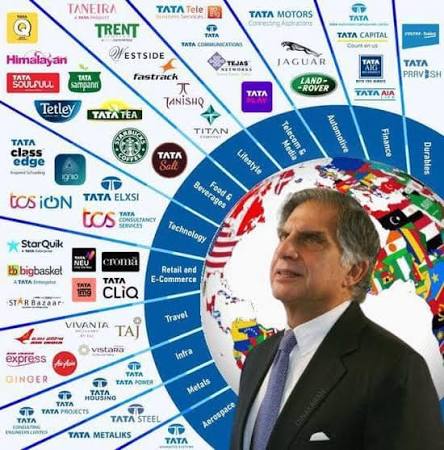
Ratan Tata took over as chairman of Tata Sons in 1991, the same year India began a major economic liberalisation process. According to Tata Group’s own historical account, the group at that time was large, diversified and bureaucratic, while Tata’s leadership pushed it towards greater cohesion, innovation and international expansion.
The transformation was not simply about making Tata companies bigger.
The group began making major international acquisitions. Tata Tea acquired Tetley in 2000, Tata Steel acquired Corus in 2007, and Tata Motors acquired Jaguar Land Rover in 2008.
At the same time, Tata Motors pursued ambitious products designed for Indian consumers, including the Indica and Nano. The Nano eventually became a commercial disappointment, showing that even bold ideas backed by significant resources can fail.
For a startup founder, this is valuable because entrepreneurship is rarely a straight line from idea to success.
1. Think Long Term, Not Just About the Next Quarter
One of the strongest Ratan Tata leadership lessons is the importance of long-term thinking.
During his tenure, the Tata Group did not limit itself to protecting its existing Indian businesses. It pursued international expansion and acquired established global brands such as Tetley, Corus and Jaguar Land Rover. The Tata Group’s official history and timeline provide additional context on this period of expansion.
These were significant decisions with substantial financial and operational risks.
The entrepreneurial lesson is not that every founder should acquire another company.
The lesson is to ask where the business should be five or ten years from now.
This kind of thinking is closely connected to developing the right entrepreneur mindset. Instead of focusing only on immediate results, entrepreneurs need to understand how today’s decisions affect the future of the business.
A founder who focuses only on immediate revenue may ignore brand building, technology, customer trust, employee development or market positioning.
How to apply this
Before making a major business decision, ask:
- Will this help the business two or three years from now?
- Does it strengthen our capabilities?
- Does it improve our position with customers?
- Are we sacrificing long-term trust for short-term revenue?
Long-term thinking does not mean ignoring cash flow. It means balancing today’s survival with tomorrow’s position.
2. Take Calculated Risks, Not Reckless Risks
One of the practical Ratan Tata leadership lessons is that ambitious leadership requires calculated risk-taking.
The Jaguar Land Rover acquisition in 2008 was a major example. Tata Motors acquired the brands from Ford for $2.3 billion during a period of considerable uncertainty in the global automotive industry.
For entrepreneurs, the important distinction is between calculated risk and blind risk.
Calculated risk means understanding the opportunity, downside, resources required and possible alternatives before committing.
A startup founder might take a calculated risk by investing heavily in a promising product after validating customer demand.
Blind risk would mean spending the company’s remaining cash simply because the founder believes the idea will work.
For first-time founders, this is especially important because limited resources make financial discipline critical. Before taking a major risk, entrepreneurs should understand the fundamentals covered in the essential skills every entrepreneur must learn in the first year.
How to apply this
Before taking a major risk, write down:
Potential upside → Potential downside → Probability → Resources required → Exit option
If you cannot explain the downside clearly, you probably have not analysed the risk enough.
3. Innovation Should Solve a Real Problem
Ratan Tata’s approach to product development also offers an important lesson in innovation.
The Tata Nano was created around the idea of making car ownership more accessible. Tata Group describes the Nano as a people’s car designed to make safe transport affordable to millions.
The ambition was significant.
However, the Nano did not become the commercial success that Tata Motors expected. Reuters reported that the project was hurt by issues including safety concerns and marketing problems and was eventually discontinued.
This is a crucial entrepreneurial lesson.
A technically ambitious product is not automatically a successful product.
Customers evaluate the complete proposition: price, quality, positioning, trust, convenience, status, experience and communication.
How to apply this
Do not ask only:
“Can we build it?”
Also ask:
“Will customers want it, understand it and feel comfortable buying it?”
Innovation becomes commercially useful when technology, customer need and market positioning work together.
4. Failure Can Become Business Intelligence
The Nano story is particularly valuable because it shows why Ratan Tata leadership lessons should include both successful decisions and decisions that did not produce the expected results.
Not every major decision under his leadership succeeded.
The Nano had a powerful concept, significant attention and an ambitious price target, but the product struggled commercially. Reuters described the project as an unsuccessful one despite Tata’s strong personal involvement.
Entrepreneurs should pay attention to this.
Failure does not automatically mean the entrepreneur was foolish. Sometimes the market rejects the positioning, timing, distribution model or customer experience.
The useful response is to understand why.
A better approach to failure
After a failed product or campaign, review:
- What assumption proved wrong?
- What did customers actually want?
- Which part of the execution failed?
- What could have been tested earlier?
- What should never be repeated?
This turns failure into business intelligence.
This mindset is also useful when understanding why most aspiring entrepreneurs fail before they start. Many failures happen because founders do not test their assumptions, understand customers, or prepare for challenges before committing significant time and money.
5. Build Trust Alongside Profit
Another major Ratan Tata leadership lesson concerns the relationship between business and reputation.
Tata Group’s own account of Ratan Tata’s leadership repeatedly highlights values such as integrity, excellence, innovation and philanthropy. The group also describes his emphasis on humility and social contribution.
For a small entrepreneur, this does not mean copying the philanthropic scale of a large conglomerate.
It means understanding that reputation is a business asset.
A local business that keeps its promises can build repeat customers. A freelancer who communicates honestly can receive referrals. A startup that handles customer complaints responsibly can protect its brand during difficult periods.
Profit matters.
But trust influences whether customers, employees, suppliers and partners continue doing business with you.
How to apply this
Create simple rules for your business:
- Do not promise what you cannot deliver.
- Be transparent about pricing.
- Correct mistakes quickly.
- Treat employees and suppliers fairly.
- Avoid short-term decisions that can damage long-term trust.
6. Give People Responsibility and Build Future Leaders
Leadership is not simply about making every important decision yourself.
When Ratan Tata took over Tata Sons, he worked to make the large group more cohesive and introduced changes that gave younger leaders greater opportunities. Reuters reported that he enforced retirement-age policies and promoted younger people into senior positions as part of his effort to reshape the organisation.
This provides an important lesson for founders.
A company cannot scale if every decision depends on the founder.
At the beginning, the founder may handle sales, marketing, hiring, customer service and finance. But as the business grows, this becomes a bottleneck.
How to apply this
Start delegating before you think you are ready.
Give team members ownership of specific outcomes rather than only individual tasks.
For example:
Instead of saying, “Manage our Instagram account,” say:
“You own our Instagram growth. Develop the content plan, publish consistently and report the results every month.”
Responsibility develops capability.
As a business grows, delegation also requires personal discipline from the founder. Entrepreneurs need systems and routines that help them continue executing even when motivation is low. This is explored further in how entrepreneurs build discipline when motivation fails.
7. Stay Ambitious Without Losing Humility
Perhaps the most visible aspect of Ratan Tata’s leadership style was the contrast between the scale of his responsibilities and his relatively understated public persona.
Tata Group describes him as a leader known for quiet dignity and humility, while its leadership tribute after his death highlighted his commitment to excellence, integrity, innovation and humility.
For entrepreneurs, humility should not mean lacking confidence.
It means remaining open to information.
A founder who believes they already know everything stops listening to customers, employees and competitors.
A humble entrepreneur can still be highly ambitious while accepting that an idea may be wrong.
That combination is powerful:
High ambition + low ego + willingness to learn.
Ratan Tata’s Leadership in Action: Jaguar Land Rover
The Jaguar Land Rover acquisition is one of the clearest case studies for understanding Tata’s approach to strategic risk.
Tata Motors acquired Jaguar Land Rover from Ford in 2008 for $2.3 billion. Tata’s official history of the automotive business provides additional context on the Jaguar Land Rover acquisition and Tata Motors’ evolution
The entrepreneurial lesson is not simply “buy famous companies.”
It is about recognising when a strategic asset can strengthen a larger business.
A founder should therefore look beyond the immediate price of an opportunity.
Ask:
- What capability will this give us?
- What market will it open?
- What brand value does it create?
- Can we operate it effectively?
- Does it fit our long-term strategy?
Strategic growth works when the opportunity strengthens the underlying business rather than merely increasing its size.
What Ratan Tata’s Failures Teach Entrepreneurs
A balanced discussion of Ratan Tata should include the decisions that did not produce the desired outcome.
The Tata Nano is the clearest example.
The idea addressed an understandable problem: affordable personal transportation. Yet a good idea can still struggle if the market perceives the product differently from how the company intended.
Reuters reported that the Nano faced marketing and safety-related challenges and was eventually discontinued. The Reuters report on Ratan Tata and his business legacy provides independent context on the project and its challenges.
There is another broader lesson here.
Leadership does not eliminate failure. Good leadership improves how an organisation responds to uncertainty and failure.
Entrepreneurs should therefore avoid judging themselves only by whether every decision succeeds.
Instead, judge the quality of the decision-making process.
How Entrepreneurs Can Apply These Ratan Tata Leadership Lessons
You do not need a large company, millions of rupees or a multinational team to apply these Ratan Tata leadership lessons.
A small business can start with simple practices such as customer validation, careful spending, consistent execution, and gradual growth. Entrepreneurs who are starting with limited capital can also learn about bootstrapping a startup and how to build a business without depending entirely on external funding.
1. Create a five-year direction
Write down what you want your business to become.
Do not worry about predicting everything. Establish a direction.
2. Separate calculated risks from emotional decisions
Before spending significant money, document the upside, downside and assumptions.
3. Talk to customers regularly
Do not build products based only on your own opinion.
Ask customers what problem they are actually trying to solve.
4. Build trust into your operating system
Keep promises, communicate clearly and fix mistakes.
5. Delegate one responsibility
Give one team member ownership of a measurable outcome.
6. Review failures without ego
After a disappointing result, look for the broken assumption rather than immediately blaming a person.
7. Protect your reputation
Ask yourself whether a decision that improves this month’s profit could damage next year’s trust.
These practices are simple, but they can significantly improve entrepreneurial decision-making.
Key Takeaways
The most practical Ratan Tata leadership lessons for entrepreneurs are:
- Think beyond short-term profit.
- Take calculated risks when the opportunity is strong.
- Solve real customer problems, not imaginary ones.
- Treat failure as information.
- Build trust alongside financial performance.
- Develop people instead of creating founder dependency.
- Stay ambitious while remaining open to learning.
Ratan Tata’s career is valuable not because every decision was successful, but because it demonstrates the complexity of leading a large organisation through change.
For entrepreneurs, that is perhaps the more useful lesson.
Business success is not about avoiding every mistake. It is about making thoughtful decisions, learning quickly and building something that can last.
Frequently Asked Questions
What are the main Ratan Tata leadership lessons for entrepreneurs?
The main lessons include long-term thinking, calculated risk-taking, customer-focused innovation, learning from failure, building trust, developing future leaders and staying humble. Both large companies and small businesses can apply these principles.
What was Ratan Tata’s leadership style?
Ratan Tata’s leadership style is commonly associated with strategic thinking, calculated risk-taking, innovation, global expansion and a strong emphasis on values. Tata Group’s own accounts also highlight his humility and commitment to integrity and excellence.
What can entrepreneurs learn from the Tata Nano?
The Tata Nano teaches entrepreneurs that a strong product idea does not guarantee market success. Customer perception, positioning, communication, safety, distribution and overall experience can be just as important as the underlying product concept.
How did Ratan Tata approach business risk?
Ratan Tata supported ambitious strategic moves, including major international acquisitions such as Tetley, Corus and Jaguar Land Rover. The broader lesson for entrepreneurs is to evaluate significant risks against long-term strategic opportunities rather than taking risks purely for excitement or growth.
Why is Ratan Tata considered an influential Indian business leader?
Ratan Tata helped transform the Tata Group during a period of major economic change in India. His tenure included international expansion, major acquisitions, product innovation, and continued emphasis on the group’s values and philanthropic activities.
