Starting a business does not always require an office, a team, or a large amount of capital. Many entrepreneurs begin with a laptop, a phone, a useful skill, and a simple offer.
Still, low investment does not mean low effort or low risk.
A smarter approach is to start small, test demand with real customers, and learn from their feedback. Spend more only when the evidence justifies it.
This guide covers 15 practical low-investment startup ideas across services, digital products, local businesses and product-based models. For each idea, you will see the approximate starting investment, how it makes money, who it suits, the main challenge, and a practical first test.
Choosing from the many low-investment startup ideas available today can feel overwhelming, especially when you have limited money and want to avoid unnecessary risks. The practical approach is to start with a skill, solve a real customer problem, and test demand before investing heavily.
Table of Contents
One important distinction is worth making. A low-investment business is not automatically a venture-backed startup. Some ideas in this list are better described as freelance services or small businesses. Others could potentially develop into scalable startups if they eventually involve a repeatable business model, technology, innovation, or a larger market opportunity.
What Are Low-Investment Startup Ideas?
Low-investment startup ideas are business models you can test with limited upfront capital.
They often rely on existing skills, a phone or laptop, and affordable tools rather than expensive premises, equipment, or large amounts of inventory.
The goal is not to build everything immediately. It is to find a customer problem, create a simple offer, and discover whether people are willing to pay for it.
Can You Start a Startup With Little Money?
Yes, depending on the business model.
Service and digital businesses often require fewer upfront assets than businesses involving inventory, equipment, or physical premises.
However, every business still requires some combination of time, skills, tools, marketing, and operating costs.
If you are considering a formal startup in India, remember that the everyday use of the word “startup” is broader than the government’s DPIIT recognition framework. DPIIT recognition has specific eligibility requirements around the entity, innovation or improvement, scalability, and other conditions.
For a beginner, the more useful question is often:
Can I test this business idea without committing a large amount of money?
Key Takeaways
- Start with a customer problem, not just a business label.
- Test demand before spending heavily on tools, stock, or advertising.
- Talk to potential customers early.
- Aim for your first few paying customers before scaling.
- Track your costs from the beginning.
- Reinvest carefully.
- Choose a model that matches your skills, time, and available resources.
How to Choose the Right Low-Investment Startup Idea

Do not choose an idea simply because it sounds trendy.
Start with what you already know, the problems you understand, and the customers you can realistically reach.
When comparing low-investment startup ideas, look beyond the initial cost. Consider how quickly you can find potential customers, whether people are willing to pay, and how easily you can deliver the product or service.
If you are still exploring opportunities, begin with our guide on how to find a startup idea. Once you have a shortlist, research the opportunity before committing significant money or time.
Ask yourself:
| Factor | Question to Ask |
|---|---|
| Skills | What can I already do well? |
| Demand | Who has this problem, and how often? |
| Investment | What must I spend before my first sale? |
| Time | How many hours can I give each week? |
| Customers | How will I reach my first 10 customers? |
| Scalability | Can this eventually grow beyond my personal time? |
| Competition | Who already serves these customers? |
| Staying power | Will I still want to work on this after six months? |
The costs below are indicative Indian rupee ranges. Actual costs vary by city, equipment, software, customer acquisition, business model, and whether you already own the necessary tools.
These low-investment startup ideas for beginners cover service-based businesses, online opportunities, local services, and simple product businesses. The right choice depends on your skills, available time, customer demand, and starting budget.
1. Content Writing and Copywriting Service
What It Is
You write blog articles, website pages, product descriptions, emails, or other content for businesses.
Many small businesses need useful content but do not have the time or expertise to produce it consistently.
Estimated Starting Investment
Low: about ₹0 to ₹10,000
The cost can be lower if you already have a computer and internet connection.
How It Makes Money
You can charge per article, per project, per word, or through monthly retainer packages.
Who It Suits
People with strong writing, research, and editing skills.
How to Start
Pick one industry, create three strong sample pieces, build a simple portfolio, and approach potential clients directly.
Key Challenge
Finding consistent clients and setting sustainable prices can be difficult in the beginning.
Real-Life Example
Illustrative example: A commerce graduate who understands accounting creates sample articles for tax-filing apps and small accounting firms. She offers a paid trial article and then proposes a monthly package.
The lesson is simple: a specific subject area can make your service easier to understand and sell.
First Step to Test It
Contact five businesses in one niche and offer a small paid writing project.
2. Social Media Management
What It Is
You plan, create, and publish social media content for businesses. Depending on the service, you may also manage comments, basic analytics, and content calendars.
Estimated Starting Investment
Low: about ₹2,000 to ₹15,000
How It Makes Money
Monthly retainers, content packages, or additional fees for advertising and content production.
Who It Suits
Organised people who understand social platforms and can create concise, useful content.
How to Start
Choose one business category, such as gyms, clinics, or restaurants. Create a sample 30-day content calendar and approach potential clients.
Key Challenge
Clients may expect immediate results even though audience growth and customer acquisition often take time.
Real-Life Example
Illustrative example: A part-time marketer notices that local coaching centres post irregularly. She creates a 30-day content plan for one centre and agrees on measurable goals such as enquiries generated.
The lesson is to define what success means before starting the work.
First Step to Test It
Audit three local business pages and send each owner a short list of practical improvements.
3. Local Digital Marketing Service
What It Is
You help local businesses improve their online visibility through services such as Google Business Profile support, local SEO, content, WhatsApp catalogues, or basic advertising.
Estimated Starting Investment
Low to moderate: about ₹5,000 to ₹30,000
How It Makes Money
Setup fees, individual projects, or monthly management fees.
Who It Suits
People who understand digital marketing and can explain marketing results in simple business terms.
How to Start
Choose one local business category, learn its common marketing problems, and create a simple audit checklist.
Key Challenge
Some small-business owners are cautious about spending money on marketing without clear evidence of value.
Real-Life Example
Illustrative example: A freelancer reviews the online presence of several neighbourhood clinics and identifies missing information, weak content, and poor local visibility. She offers one clinic a small fixed-scope improvement project.
The lesson is that showing a useful problem can be more effective than making a generic sales pitch.
First Step to Test It
Prepare a one-page digital marketing audit for one local business and share it with the owner.
4. Online Tutoring or Coaching
What It Is
You teach a subject or skill through video calls, live classes, or recorded lessons.
Possible areas include school subjects, exam preparation, spoken English, professional skills, or hobbies.
Estimated Starting Investment
Low: about ₹5,000 to ₹30,000
How It Makes Money
Hourly sessions, monthly batches, packages, or course sales.
Who It Suits
People who understand a subject well and can explain it clearly.
How to Start
Choose a specific learner group, prepare a short demo lesson, and offer a small first batch.
Key Challenge
Building trust takes time, and learning outcomes also depend on the student’s effort.
Real-Life Example
Physics Wallah began with educational content on YouTube before developing into a much larger education business. YourStory reported that founder Alakh Pandey started with a small setup and limited resources.
The lesson for beginners is not to copy the company’s eventual scale. It is to recognise that useful educational content can help test audience interest before making larger investments.
First Step to Test It
Record a 10-minute lesson and share it with ten potential students or parents.
5. Graphic Design Service
What It Is
You create social media graphics, brochures, presentations, advertisements, menus, or other visual assets for businesses.
Estimated Starting Investment
Low: about ₹0 to ₹20,000
The actual cost depends heavily on the computer and software you already own.
How It Makes Money
Project fees, fixed packages, or monthly design retainers.
Who It Suits
People with visual creativity who can understand feedback and business objectives.
How to Start
Create five sample designs for one niche and develop two or three simple service packages.
Key Challenge
Unlimited revisions can quickly reduce your profit, so define your scope clearly.
Real-Life Example
Illustrative example: A college student creates a small “festival offer post pack” for local retailers containing three ready-to-use designs.
The lesson is that a clearly defined productised service can be easier to buy than a vague offer such as “I do graphic design.”
First Step to Test It
Create one sample design for a local business and ask whether the owner would pay for a small package.
6. Video Editing Service
What It Is
You edit short-form videos, educational content, interviews, advertisements, or other videos for creators and businesses.
Estimated Starting Investment
Moderate: about ₹10,000 to ₹50,000
The largest expense may be a capable computer if you do not already own one.
How It Makes Money
Per-video fees, project fees, or monthly editing packages.
Who It Suits
Detail-oriented people who enjoy storytelling, editing, and technical work.
How to Start
Choose one type of video, create three sample edits, and approach creators or businesses directly.
Key Challenge
Large files, tight deadlines, and frequent revisions can make the work demanding.
Real-Life Example
Illustrative example: A beginner turns one interview recording into a short vertical video and sends the finished sample to a local fitness coach. The coach then asks for four videos each month.
The lesson is that a finished sample can demonstrate your ability more clearly than a long introduction.
First Step to Test It
Create one short sample from your own footage or material that you have permission to use and show it to three potential clients.
7. Website Setup and Maintenance Service
What It Is
You build simple websites for local businesses and provide ongoing updates, backups, security checks, and content changes.
Estimated Starting Investment
Low: about ₹5,000 to ₹25,000
How It Makes Money
One-time website fees plus recurring maintenance plans.
Who It Suits
People comfortable with WordPress or website-building platforms.
How to Start
Build two demo websites, choose one niche, and create a fixed-scope package with clear deliverables.
Key Challenge
Scope creep can become a problem when clients continuously request features outside the original agreement.
Real-Life Example
37signals, the company behind Basecamp, started as a web design firm before developing its own software products.
The lesson is that service work can sometimes reveal recurring customer problems that eventually become product opportunities.
First Step to Test It
Offer to rebuild or improve one page of a local business website for a small fixed fee.

8. Virtual Assistant Service
What It Is
You help busy professionals with tasks such as scheduling, inbox management, data entry, research, documentation, and administrative work.
Estimated Starting Investment
Low: about ₹0 to ₹15,000
How It Makes Money
Hourly rates, project fees, or monthly support packages.
Who It Suits
Reliable, organised people with good communication and attention to detail.
How to Start
List the tasks you can perform well, choose one customer type, and offer a short paid trial.
Key Challenge
Income is closely tied to your available time, and some clients may expect quick responses.
Real-Life Example
Illustrative example: A former office coordinator offers email and calendar support to independent consultants. She starts with five hours per week for one client and expands only after the workflow becomes manageable.
The lesson is that reliability can be a competitive advantage in service businesses.
First Step to Test It
Ask three independent professionals which administrative task they would most like to delegate.
9. Home-Based Food Business
What It Is
You prepare and sell food from home, such as tiffin meals, snacks, cakes, or regional specialities.
Estimated Starting Investment
Moderate: about ₹10,000 to ₹60,000
Costs can include ingredients, utensils, packaging, and applicable registrations or compliance requirements.
How It Makes Money
Direct orders, recurring meal subscriptions, event orders, or bulk purchases.
Who It Suits
People with cooking skills who can maintain consistent quality and hygiene.
How to Start
Begin with a small menu, calculate the true cost per item, check the applicable requirements, and use pre-orders where practical.
Key Challenge
Food businesses have safety and regulatory requirements. In India, food businesses must comply with applicable FSSAI licensing or registration requirements. The official FoSCoS system provides the current application and eligibility process.
Real-Life Example
Illustrative example: A home baker accepts weekend cake orders only through advance booking from a small local community.
The lesson is that pre-orders can reduce waste and help protect working capital.
First Step to Test It
Offer three products to a small local audience and collect advance orders for one weekend.
10. Print-on-Demand and Custom Products
What It Is
You create designs for products such as T-shirts, mugs, posters, or phone cases. A production partner manufactures and ships the product after an order is placed.
You can also combine this model with locally produced personalised products.
Estimated Starting Investment
Low to moderate: about ₹5,000 to ₹40,000
How It Makes Money
You earn the difference between your selling price and the combined production, platform, and marketing costs.
Who It Suits
Creative people who understand a specific audience, community, or interest.
How to Start
Choose one niche, create five designs, order samples, and test one sales channel.
Key Challenge
Competition can be high, and margins may be limited. Supplier quality and delivery also affect customer satisfaction.
Real-Life Example
Teespring’s early model used pre-orders rather than requiring founders to print a large batch of shirts in advance. TechCrunch reported on the company’s early approach to crowdfunding T-shirt demand.
The lesson is relevant to beginners: where the model allows it, test customer demand before committing cash to production.
First Step to Test It
Create one design and test genuine pre-orders or purchase intent from a small, relevant audience before buying inventory.
11. Niche Reselling
What It Is
You sell products sourced from other businesses to a specific audience.
Examples include kitchen accessories, study products, hobby equipment, or fitness accessories.
Estimated Starting Investment
Moderate: about ₹5,000 to ₹50,000
The amount depends on whether you hold stock or use a supplier-led fulfilment model.
How It Makes Money
Your revenue comes from the margin between the selling price and your total product and fulfilment costs.
Who It Suits
People who understand a specific customer group and can identify products that solve practical needs.
How to Start
Choose a narrow category, compare suppliers, test a few products, and carefully track returns, delivery, and quality issues.
Key Challenge
Returns, damaged products, supplier problems, and price competition can quickly reduce margins.
Real-Life Example
Illustrative example: Instead of opening a general online store, a beginner focuses on a small category such as study accessories for college students and tests a handful of products first.
The lesson is to learn the customer and category before committing significant money to inventory.
First Step to Test It
Show three potential products to a small relevant audience and measure genuine buying interest before purchasing significant stock.
12. Home Cleaning or Home-Service Business
What It Is
You provide services such as home cleaning, deep cleaning, basic home maintenance, or other practical household services.
Estimated Starting Investment
Moderate: about ₹15,000 to ₹80,000
Equipment, supplies, transportation, and staffing can change the cost substantially.
How It Makes Money
Per-visit pricing, service packages, or repeat bookings.
Who It Suits
People comfortable with practical work who can provide reliable service and build customer trust.
How to Start
Choose one service and a small service area. Set clear prices, define what is included, and ask early customers for feedback.
Key Challenge
Quality, safety, reliability, and customer trust become increasingly important as the operation grows.
Real-Life Example
Urban Company grew around the problem of fragmented home services in India. Its eventual scale and funding are very different from a beginner’s low-investment starting point, but its model illustrates the demand for organised and dependable home services.
First Step to Test It
Offer one clearly defined service to a nearby customer and ask for an honest review.
13. Photography and Content Creation for Local Businesses
What It Is
You create product photographs, menu images, social media videos, or other visual content for local businesses.
Estimated Starting Investment
Low to moderate: about ₹10,000 to ₹60,000
The cost can be much lower if you already have a capable smartphone.
How It Makes Money
Per-shoot fees, monthly content packages, or additional editing services.
Who It Suits
People with a good visual eye and patience for working with different customers.
How to Start
Create a small portfolio, choose one business category, and offer a simple trial package.
Key Challenge
Work can be seasonal, and equipment requirements can increase as you take on more demanding projects.
Real-Life Example
Illustrative example: A hobby photographer creates product photos for a local handicraft seller using a smartphone and natural light.
The lesson is that you can often demonstrate your value with equipment you already own.
First Step to Test It
Photograph five products for one local seller and ask what they would pay for regular content.
14. Digital Products
What It Is
You create a digital resource once and sell it repeatedly.
Examples include templates, checklists, planners, spreadsheets, educational resources, guides, and small business tools.
Estimated Starting Investment
Low: about ₹0 to ₹10,000
How It Makes Money
Individual sales, bundles, memberships, or related services.
Who It Suits
People with useful knowledge that can be organised into a practical solution.
How to Start
Identify one narrow problem, create a simple first version, and offer it to a small audience.
Key Challenge
Creating the product is only one part of the business. Finding the right audience and earning their attention can be harder.
Real-Life Example
Illustrative example: A teacher creates a revision workbook for one school subject and sells it to a small group of parents. She improves the resource using buyer feedback.
The lesson is that early customers can help improve the product.
First Step to Test It
Create a sample and offer it to 20 relevant people with a simple pre-order or purchase option.
15. Bookkeeping, Data and Research Support for Small Businesses
What It Is
You help small businesses with data entry, spreadsheet cleanup, basic reports, customer-list management, or market research.
This is primarily a B2B support service.
Estimated Starting Investment
Low: about ₹5,000 to ₹25,000
How It Makes Money
Project fees, monthly retainers, or recurring support packages.
Who It Suits
Careful, organised people who value accuracy and confidentiality.
How to Start
Choose one specific task, create a sample spreadsheet or report, and approach small businesses directly.
Key Challenge
Accuracy matters. If a service involves regulated accounting, taxation, or professional advice, stay within your qualifications and applicable requirements.
Real-Life Example
Illustrative example: A spreadsheet-skilled graduate offers to clean customer data and create a simple monthly sales report for a local retailer.
The lesson is that simple, reliable B2B work can solve a genuine business problem.
First Step to Test It
Ask one small business owner whether you can clean a sample spreadsheet and demonstrate the improvement.
Comparison of the 15 Ideas
These low-investment startup ideas differ in cost, skills, customer acquisition, and growth potential. The labels below are qualitative observations, not rankings or guarantees.
The following comparison of low-investment startup ideas can help you shortlist options based on your skills, budget, and preferred way of working.
| Idea | Starting Investment | Skill Level | Online/Offline | First-Customer Difficulty | Growth Potential |
|---|---|---|---|---|---|
| Content writing | Low | Moderate | Online | Medium | Moderate |
| Social media management | Low | Moderate | Online | Medium | Moderate |
| Local digital marketing | Low to Moderate | Moderate | Both | Medium | Good |
| Online tutoring | Low | Moderate | Online | Medium | Good |
| Graphic design | Low | Moderate | Online | Medium | Moderate |
| Video editing | Moderate | Moderate to High | Online | Medium | Moderate |
| Website setup | Low | Moderate | Online | Medium | Good |
| Virtual assistant | Low | Basic to Moderate | Online | Easy to Medium | Limited |
| Home food business | Moderate | Basic to Moderate | Offline | Easy to Medium | Moderate |
| Print-on-demand | Low to Moderate | Basic to Moderate | Online | Hard | Moderate |
| Niche reselling | Moderate | Basic | Both | Medium | Moderate |
| Home cleaning | Moderate | Basic | Offline | Medium | Good |
| Photography | Low to Moderate | Moderate | Both | Medium | Moderate |
| Digital products | Low | Moderate | Online | Hard | Good |
| Data and research support | Low | Moderate | Online | Medium | Moderate |
The table should be used as a starting framework, not as a prediction of business performance. Actual results depend on the customer segment, market, location, competition, execution, and business model.
Which Low-Investment Startup Idea Is Right for You?
There is no single idea that is right for everyone.
The better approach is to match the business model with your existing strengths, available time, starting capital, and access to customers.
- Strong writer: Consider content services or digital products.
- Good teacher: Consider online tutoring or coaching.
- Understand local businesses: Consider local digital marketing or website services.
- Strong visual skills: Consider graphic design, video editing, or photography.
- Prefer hands-on local work: Consider home services or a food business.
- Detail-oriented and reliable: Consider virtual assistance or data and research support.
- Creative with a strong niche interest: Consider print-on-demand or customised products.
If you have more time than money, service businesses may allow you to start with fewer upfront expenses.
If you have some capital but limited time, consider models that can eventually use systems, suppliers, digital products, or recurring services.
The important thing is to choose something you can realistically test.
How to Test a Low-Investment Startup Idea
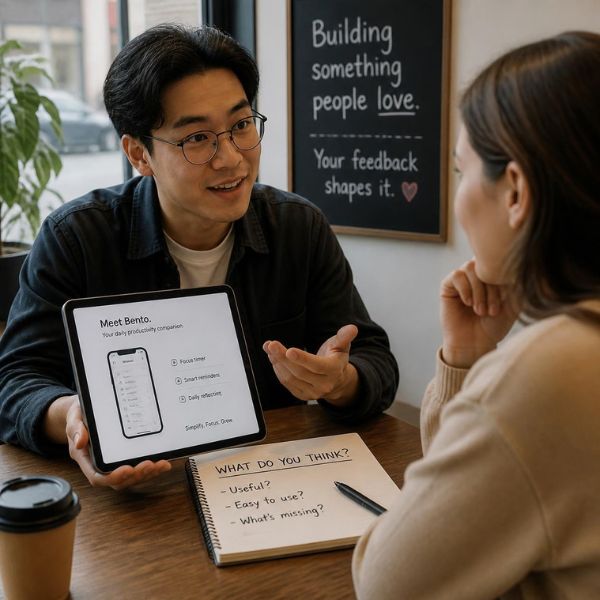
Customer conversations and small tests can reveal whether an idea deserves further investment.Before buying equipment, ordering inventory, or spending heavily on advertising, test your assumptions.
A practical process is:
- Pick a specific customer. “Local dentists” is more useful than “businesses.”
- Identify one meaningful problem. Find out what customers struggle with today.
- Create a simple offer. Start with one service, one product, or one clear outcome.
- Speak to potential customers. Ask about their current behaviour rather than simply asking whether they like your idea.
- Test willingness to pay. A paid trial, pre-order, or deposit can provide stronger evidence than compliments.
- Get your first few customers. Real customer behaviour teaches you more than assumptions.
- Improve the offer. Pay attention to objections, questions, and repeated requests.
- Decide whether to invest more. Continue, improve, or pause based on the evidence.
For a deeper process, learn how to research a business idea before you start and then validate a business idea before spending money.
If you are building something that could become a scalable startup, you can also study how to validate a startup idea before building it.
Once you have an offer that customers actually want, focus on getting your first customers before trying to scale.
Before committing significant money to any of these low-investment startup ideas, speak with potential customers, offer a small trial, and use their feedback to improve your offer.
When Should You Invest More?
A common mistake is increasing spending simply because you have become excited about an idea.
Instead, look for evidence.
You may have a stronger reason to invest when:
- Customers are repeatedly buying.
- Customers return or renew.
- You understand your acquisition process.
- Your costs are becoming predictable.
- Customers refer others.
- You can deliver the service consistently.
- You know which part of the business needs additional investment.
More spending does not automatically create more demand.
The purpose of early investment should be to improve something that already shows evidence of working.
Frequently Asked Questions
What are the best low-investment startup ideas for beginners?
Useful options include content writing, social media management, tutoring, graphic design, video editing, virtual assistance, website services, digital products, and selected local businesses. The right choice depends on your skills, available time, starting capital, and ability to reach customers.
Can I start a startup with very little money?
Yes, especially if you choose a service or digital business that can use skills and equipment you already have. You will still need time and may have costs for tools, marketing, registration, or customer acquisition.
Which startup ideas can be started from home?
Content writing, virtual assistance, tutoring, graphic design, video editing, website services, digital products, and data support can generally be operated from home. Home-based food businesses may also be possible, but applicable food-safety and registration requirements must be followed.
How do I choose the right low-investment startup idea?
Match the idea with your skills, available time, and starting capital. Then identify the customer, problem, competition, acquisition method, and likely costs. Shortlist two or three ideas and test them rather than committing immediately to one.
Should I validate a startup idea before investing money?
Yes. Validation helps you learn whether people respond to your proposed solution before you commit significant resources. Interviews, prototypes, pilots, pre-orders, and paid trials can provide useful evidence.
How can I grow a low-investment startup?
Start by finding repeatable ways to acquire and serve customers. Improve your offer, track costs, document your processes, and reinvest carefully. Add employees, technology, inventory, or new services when demand becomes consistent enough to justify the additional cost.
Final Key Takeaways
- Start with a customer problem.
- Choose an idea that matches your existing skills and resources.
- Keep the first version simple.
- Research the market before making a major commitment.
- Test demand before spending heavily.
- Focus on paying customers rather than followers or likes.
- Track every important cost.
- Learn from customer feedback.
- Reinvest carefully.
- Scale only when the evidence supports the next step.
Conclusion
The most practical low-investment startup ideas are not necessarily the trendiest ones. Choose an idea that matches your abilities, solves a specific problem, and allows you to test demand with manageable costs.
A low-investment startup is not about finding a magical business that needs no money or effort.
It is about reducing unnecessary upfront risk, testing demand early, and learning before making bigger commitments.
Choose one idea from this list. Research it, validate it, and take one practical step this week.
That step could be a sample, a customer conversation, a paid trial, or a pre-order.
Small beginnings can teach you a lot.
At Dream Entrepreneur, that is what Believe • Build • Inspire means: believe you can begin, build with evidence, and let each result guide your next move.
